
CNshopper Spreadsheet catalogue by shelf, with the link behind each find explained
Sixteen illustrated categories, followed by a guide to identifying a find’s marketplace from its address before you paste it into CNshopper.
Shelves of the CNshopper Spreadsheet, with and without photos
All sixteen categories have product images. These are browsing examples, not stock promises. Womenswear opens a keyword search, so check the category and details of each result.
 OuterwearCoats, shells, quilted and paddedCatalogue shelf
 JeansStraight, flared and wide cutsCatalogue shelf
 WomenswearKeyword results across categoriesSearch results
 HoodiesPullovers and zip-upsCatalogue shelf
 BagsCanvas, straw, nylon, leatherCatalogue shelf
 T-shirtsPlain cuts, fitted and looseCatalogue shelf
 JewellerySmall pieces, light parcelsCatalogue shelf
 SweatpantsWide-leg and jogger cutsCatalogue shelf
 SneakersCompare the size chart and sole measurements.Category
 Sports jerseysConfirm team, season, size and any personalisation.Category
 HatsCompare head circumference and adjustment.Category
 BeltsCheck usable length and buckle dimensions.Category
 EyewearConfirm frame width, lenses and included case.Category
 PerfumeConfirm liquid acceptance before paying.Category
 WatchesCheck case size, movement and battery restrictions.Category
 ElectronicsConfirm model, voltage, battery and route acceptance.Category
Shelves listed without a photo
- Trainers and canvas shoes
- Caps and knit hats
- Glasses and sunglasses
- Belts and buckles
- Wristwatches
- Fragrance
- Gadgets and electronics
- Sports shirts
The following notes cover dimensions, materials and transport constraints that a category photograph cannot establish.
What an entry in this catalogue holds
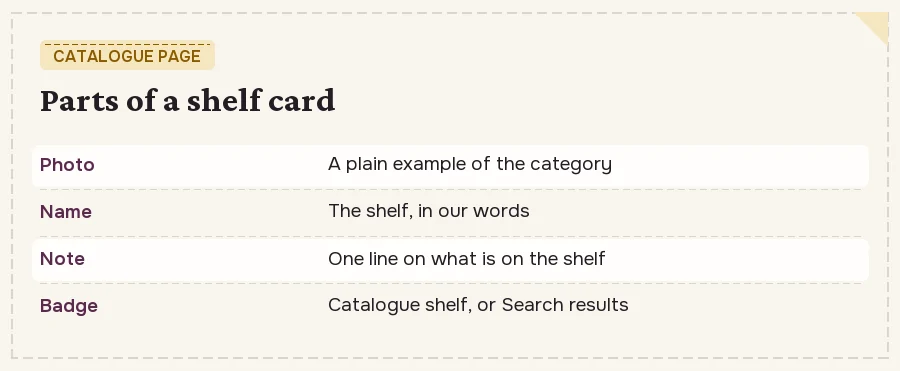
Open a shelf and each find is an entry: a product photo, a translated title, a price as the listing shows it, and a link to the listing on its marketplace. Nothing is sold here and no stock is kept. When you have chosen a find, you copy its listing link and paste it into CNshopper, which opens its own product page for the same item.
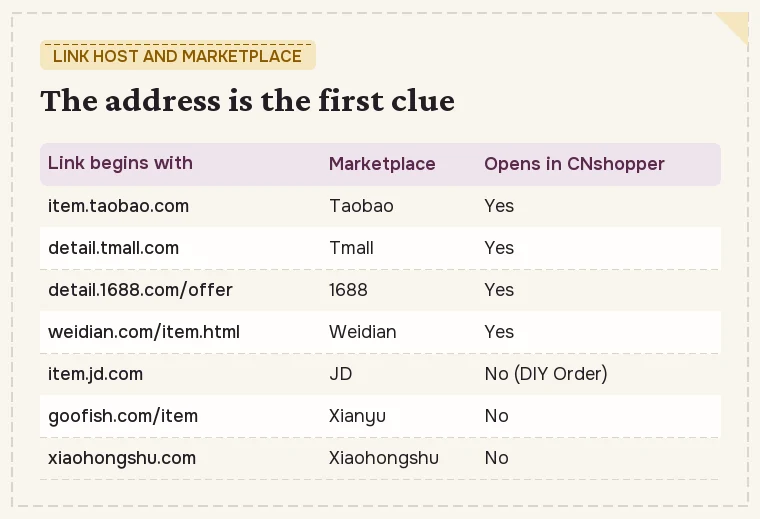
The part most buyers skip is the address in that link. It tells you the marketplace before you have read a word of the listing: item.taobao.com is Taobao, detail.tmall.com is a Tmall store, detail.1688.com/offer/ is 1688, weidian.com/item.html is a Weidian shop. Those four open directly in CNshopper. A link to goofish.com (Xianyu), item.jd.com or a Xiaohongshu page does not, as our test on 17 October 2026 showed.
Keep the seller behind the find visible in your records
A Spreadsheet entry helps locate a product, but the original listing identifies the seller and the precise purchase option. Save that URL with colour, size, quantity, measurements and material. A second-hand item, a custom-made piece and a standard new product may look similar in the catalogue while carrying different conditions. Do not assume their return routes match.
CNshopper handles the buying request and warehouse stages rather than becoming the manufacturer of every find. Compare the submitted request with the selected seller option before payment. If a link cannot be read, verify the manual-order details and any limitations before proceeding. Your saved record should make clear what was requested and from whom, not merely which category led you there.
Picking a find with the return route in mind
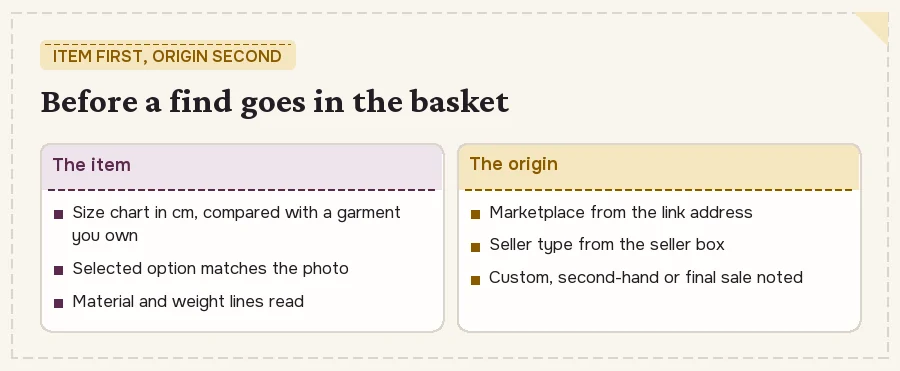
Choosing an item well is mostly about removing the reasons you might want to send it back. Read the listing’s size chart in centimetres and compare it with a garment you own, not with your usual letter size. Check the option you select against the photos: a listing with twelve colour options often has two or three that look alike on screen. Look for the material line and the weight, which tell you more than the hero photo does.
Then add the origin questions. If the find sits on a Tmall store, expect clearer return terms and stricter checks on tags. If it sits on 1688, look at whether the item is listed as customisable and what quantity the price applies to. If it is on Weidian, expect option names in Chinese on CNshopper’s page (both Weidian listings we opened kept them untranslated). If the seller looks like a private person, assume a mistake in size is yours to keep.
None of this needs to put you off a find. It changes how carefully you check before you pay and how quickly you read the warehouse photos once they arrive.
Signs a catalogue is being looked after
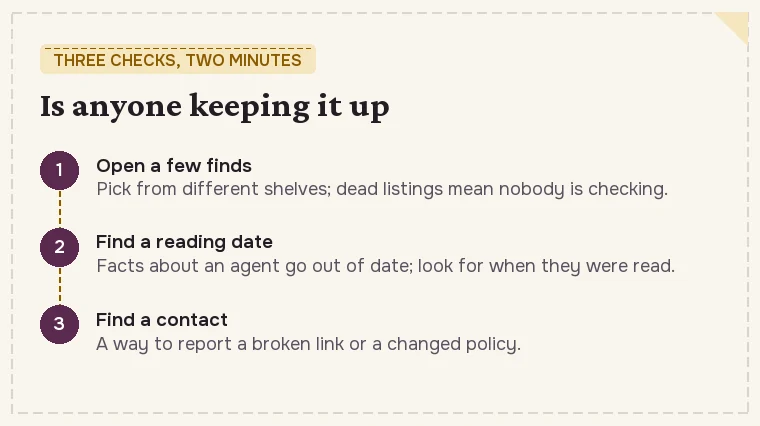
A catalogue is only useful while its links work. Open three or four finds from different shelves: if the listings have vanished or redirect to an empty shop, the catalogue has not been checked in a while. Look for a date on the page that says when it was last read, and for a way to report a broken link.
This site dates every CNshopper fact it uses (the last full re-read was 17 October 2026) and keeps a list of changes on the Changes page. The shelf links on this page go to category pages and a keyword search rather than single listings, so they do not go stale when one shop closes.