Picking well: the agent, the catalogue and the habits that keep a return possible
Choices made before the photos arrive, read through the same listing-site lens as the rest of this site.
Why CNshopper, and when another agent fits better
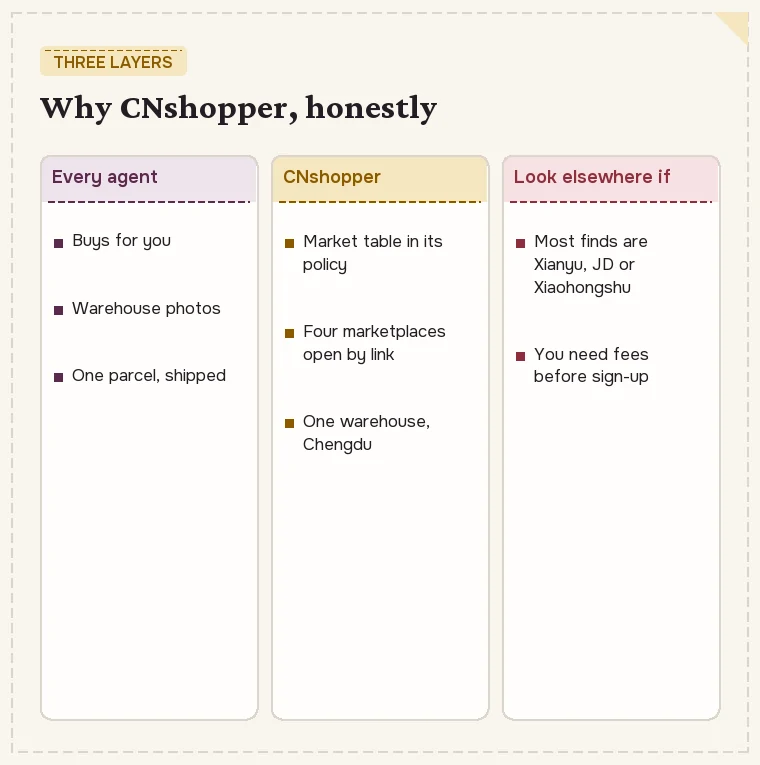
First, the parts no agent can claim as special: paying the seller for you, taking delivery at a warehouse in China, photographing the goods, packing several items into one parcel and sending it. None of that sets CNshopper apart, and none of it changes the fact that the seller decides on returns.
What is particular to CNshopper is in its paperwork and its search box. It is one of few agents to print a marketplace table in its refund policy, its policies were rewritten in English in May 2026, it runs a single warehouse in Chengdu, and its search opens Taobao, Tmall, 1688 and Weidian links directly. A 2026 blog post says buying carries no service fee; the order summary will show whether that holds for your order.
Another agent may suit you better if most of your finds are on Xianyu, JD or Xiaohongshu, because CNshopper’s search did not open those links in our test. The same is true if you need a published fee schedule before you sign up: CNshopper’s fee settings sit behind a login.
Why this spreadsheet reads finds by their origin
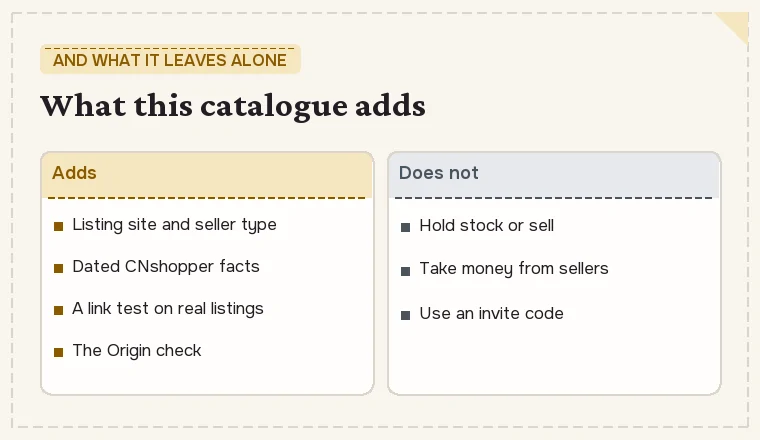
Most catalogues tell you what a find is and where to buy it. This one adds where it is listed and who sells it, because that is what CNshopper’s own policy says decides the after-sales outcome. What we do differently is small but specific: every CNshopper fact carries the date we read it, the link test was run on real listings, and the Origin check keeps CNshopper’s “may” as “may”.
What we do not do: we do not hold stock, sell anything, receive money from sellers, or use an invite code. When CNshopper changes a page, the Changes page records it.
Signs a spreadsheet site deserves your time
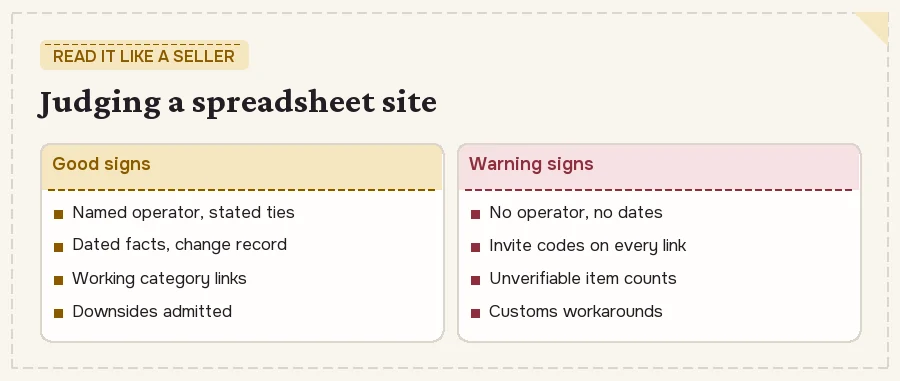
Choosing a spreadsheet site is mostly a matter of reading it the way you would read a seller. A good one says who runs it and whether it is paid by an agent. It dates its facts and keeps a record of changes. Its category links still work, and its finds point at listings rather than at an agent page dressed up as a catalogue. It does not hide the downside of the agent it sends you to.
Warning signs are just as plain: no named operator, no dates anywhere, every link carrying an invite code to one agent, claims about item counts that cannot be checked, and advice on how to get goods past customs. That last one is a reason to leave the site altogether.
Trusting an agent with a seller you never speak to
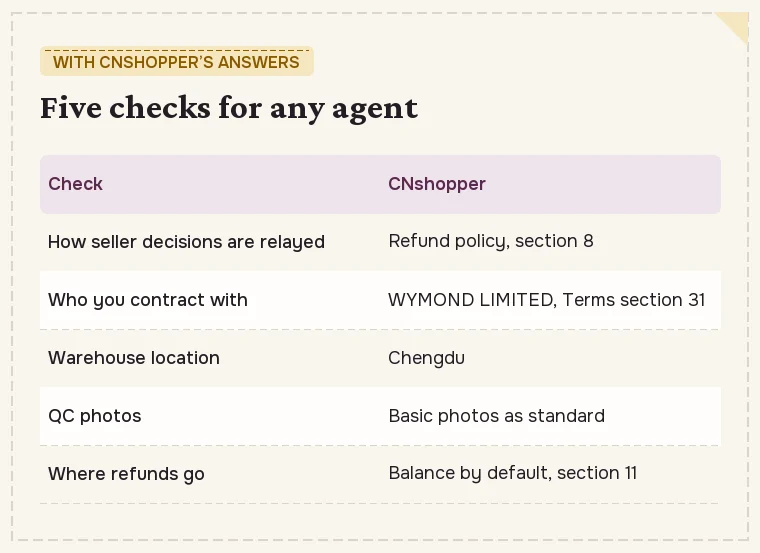
With an agent, you never deal with the seller yourself, so the agent’s written terms are what you are trusting. Before choosing one, look for five things: a refund policy that explains how seller decisions are relayed; a named company you contract with; a stated warehouse location; QC photos as a normal step rather than an extra; and a clear statement of where refunds go.
CNshopper answers all five in writing: the marketplace table in section 8, WYMOND LIMITED in its Terms of Service, the Chengdu warehouse, basic QC photos, and refunds to balance by default under section 11. Its section 16 adds a warning worth knowing: an unauthorised chargeback may delay refunds or freeze account activity, so contact support before you contact your bank.
Mistakes that cost you the return route
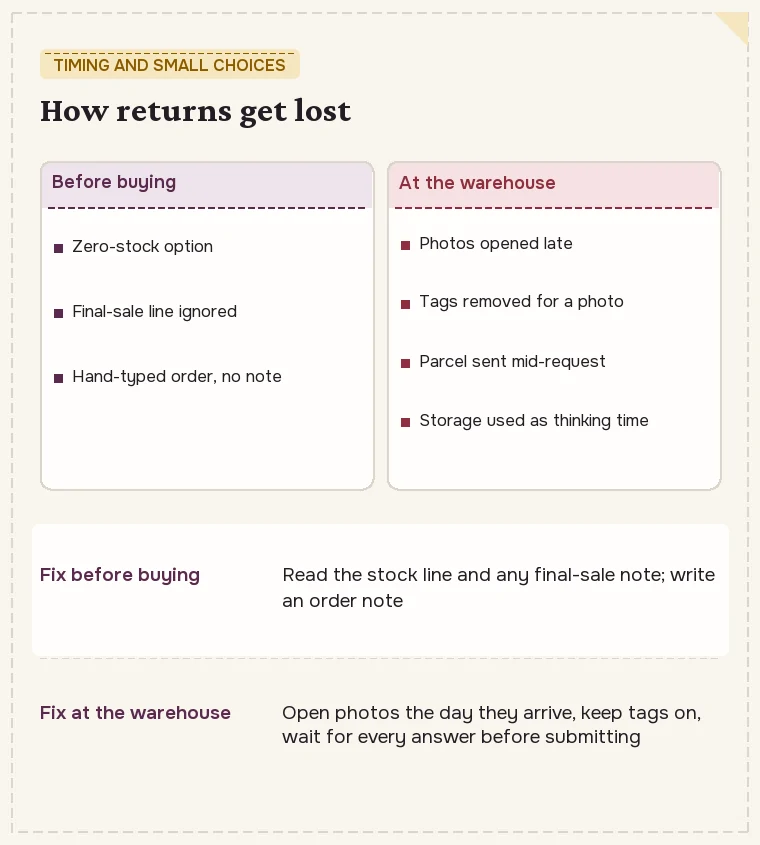
Most lost returns are not refusals; they are timing and small choices. The ones we see described most often:
- Opening the warehouse photos days after they arrive, when the seller’s window has passed.
- Picking an option whose stock reads zero, then waiting on a restock that never comes.
- Asking for tags to be removed for a photo, which can end a return to a Tmall store.
- Ignoring a final-sale or no-returns line because the price was good.
- Typing a JD or Xianyu order by hand without an order note to check the photos against.
- Submitting the parcel while a seller is still answering a return request.
- Treating the 90 days of free storage as time to decide on returns.
Each of these can be avoided before money moves or on the day the photos arrive, which is why this site spends so much of its length on those two moments.
Other agents, described in general terms
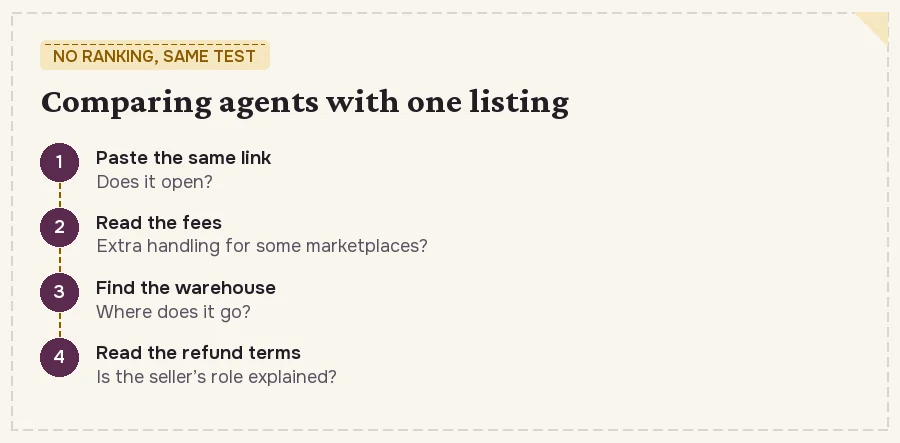
Other shopping agents work the same basic way, and all of them depend on sellers for returns. Where they differ is in the details this site cares about: which marketplaces their search opens by link, whether they charge an extra handling fee for orders from second-hand or smaller marketplaces (several do), where their warehouses are, and how clearly their refund terms explain the seller’s part.
If you compare agents, compare those things side by side with the same listing in hand. Paste the same link into each, read each refund policy for a marketplace section, and look for where refunds land. We do not rank agents, and this site does not send you to any of them.