Origin check: what a listing leaves CNshopper able to do after you pay
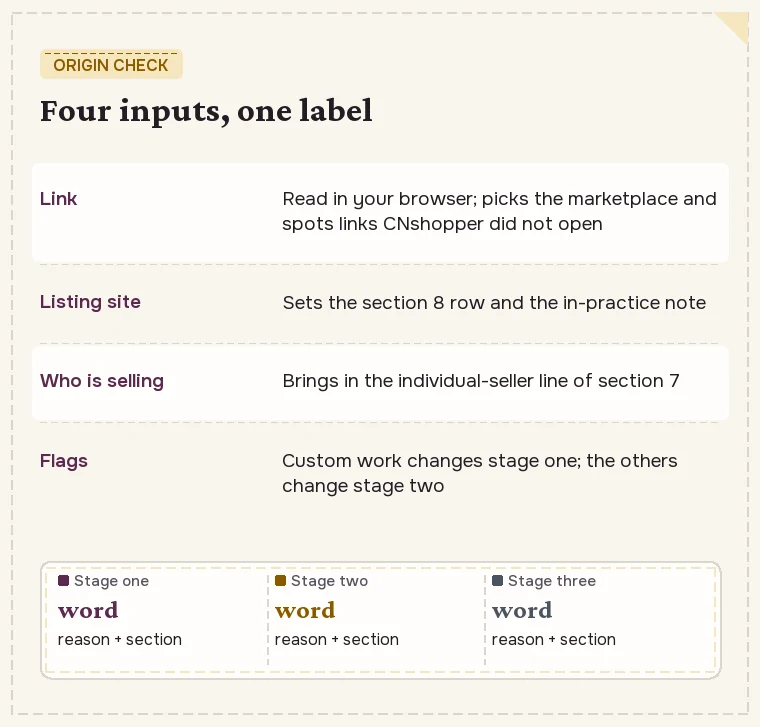
Paste a link or choose the marketplace, say who is selling and tick any flags; the check returns a three-part label built from CNshopper’s refund policy.
Run the Origin check
Choose a listing site, or paste a link, to see the three stages.
How to use the Origin check, field by field
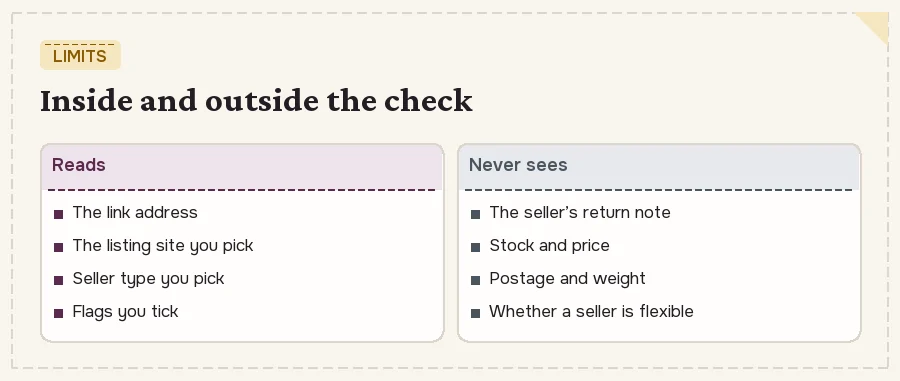
Link. Paste the listing link from a catalogue entry or from the marketplace itself. The check reads only the address: Taobao, Tmall, 1688 and Weidian links are recognised and the item number is picked out the way CNshopper’s own search box does it. JD, Xianyu and Xiaohongshu links are recognised too, with a warning that CNshopper’s search did not open them in our test. Short share links from the apps (the ones on tb.cn or qr.1688.com) get a note to open them in a browser first and copy the full address.
Listing site. Filled in for you when the link is recognised; pick it yourself if you have no link. Who is selling. Read it from the seller box on CNshopper’s product page or the shop header on the marketplace. Flags. Tick anything the listing itself says: made to order, second-hand, clearance or final sale, no returns.
The result is a three-part label. Each part names the stage, gives a one-word reading and explains it, citing the section of the refund policy it comes from.
Reading a finished label
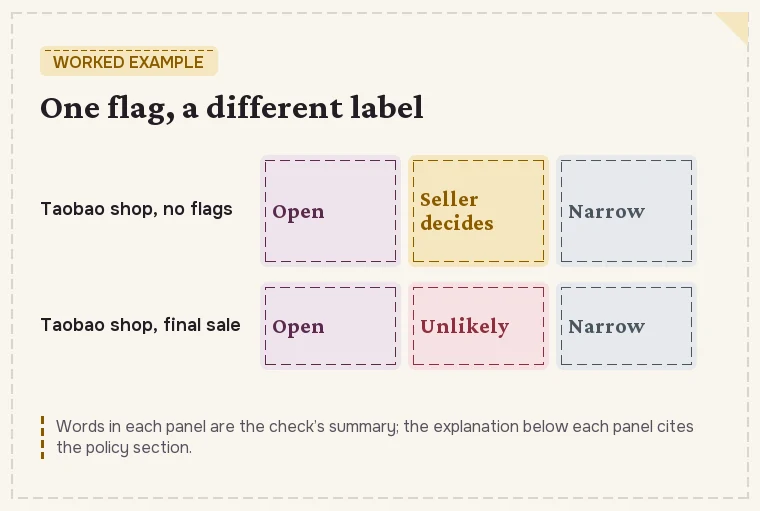
Take a pullover from a registered Taobao shop with nothing ticked. Stage one reads “Ask promptly”: request cancellation before purchasing, subject to seller exclusions and the actual order status. Stage two reads “Seller decides”: you can ask for a return or exchange if the photos show a problem, and many Taobao shops accept a return for a wrong size they sent, but CNshopper’s section 8 only says returns “may be offered”. Stage three reads “Narrow”, as it does for every listing.
Now tick “Clearance or final sale”. Stage two drops to “Unlikely”, because section 7 lists clearance and final-sale items among those that may not be returned. Change the seller to a private person and the label adds the individual-seller line from the same section. The words are deliberately plain; the reasons underneath are what to act on.
What the check cannot see
It does not fetch the listing, so it cannot read the seller’s own return note, the stock level or whether the item still exists. It does not know prices, postage or weight and never will. It cannot tell a seller’s attitude from the shop name: a registered shop can still refuse a return, and a private seller can still be generous.
It also keeps CNshopper’s hedges. Where the policy says “may”, the label says the seller decides, not that a return will happen. The in-practice notes describe how sellers on each marketplace usually behave; they are our reading of how this trade works, not something CNshopper promises.
Three listings run through the check
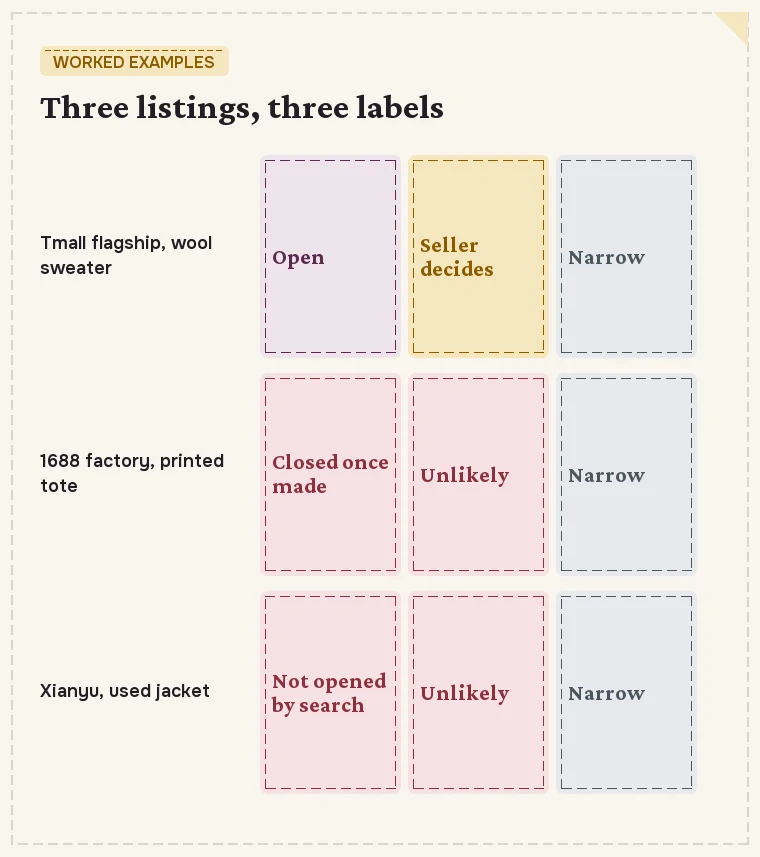
A wool sweater from a Tmall flagship store
Recognised from detail.tmall.com, which CNshopper files under Taobao. Stage one open. Stage two “Seller decides”, with a note that brand stores usually take returns of unworn items with tags and packaging intact, so keep the item untouched until the photos are checked. Stage three narrow.
A canvas tote with a printed name from a 1688 factory
Tick “Made to order, custom or personalised”. Stage one turns to “Closed once made”: section 2 says cancellation may not be possible for custom-made or made-to-order products. Stage two “Unlikely”, since section 7 lists customised products. The label suggests asking the seller, through an order note, to send a photo of the print before production.
A second-hand jacket on Xianyu
The link is recognised and flagged straight away: CNshopper’s search returned “Product Search Failed” for Xianyu links in our test. If you go ahead some other way, stage two reads “Unlikely”: second-hand items and individual sellers are both on the section 7 list, and the section 8 row for Xianyu says support is usually limited.